
Labette County's Three-Day Gap
Labette County has no distinct official 72-hour release feed. The sheriff's Released view is documented as a rolling 48-hour product. It can support the newest two days of a three-day inquiry, but it cannot establish that the oldest day is complete. Pagination must not be treated as a hidden archive because the sheriff publishes no such retention promise.
A three-day search is useful when a family member last checked before a weekend, a court event happened several days earlier, or a short roster entry has already expired. The method differs from a same-day scan. First preserve any known booking number, profile URL, charge, and booking time. Then bridge the day missing from the public feed with a saved VINE notice, a jail custody-event record, a court docket entry, or direct staff confirmation.
Check Labette County Three-Day Releases
Build the inquiry around one custody episode. A booking number is the strongest public local key. Names may be shared, and the same person may have more than one admission. Read source timestamps in the local Central time used by the sheriff. A date without its time is not enough near the edge of a rolling window.
- Set the exact start time 72 hours before the search and note the lookup time.
- Inspect the Released view for the newest 48 hours. Match booking number, booking time, charge context, age, and photograph.
- Check the sheriff home page for a latest-release card that may not agree with the Released display.
- For the uncovered oldest day, use a saved Kansas VINE message, call the jail, inspect the district court case, or request the custody event.
- If a transfer is possible, search KASPER or the receiving jurisdiction rather than labeling the person returned to the community.
The Jail Releases: 24 Hours page narrows the same official view to a same-day timestamp comparison. It does not solve the three-day gap, but it is the better route when the event happened today.
Labette 72-Hour Release Evidence
No single Labette screen supplies a full 72-hour list. The sheriff's cards still provide the key fields for releases that remain visible. Other fields must come from the jail record or court case. Keep each source's role clear.
| Field | Where it appears and what it means |
|---|---|
| Name and photograph | Roster/profile matching aids for the displayed booking. |
| Booking number or ID | Identifier used to tie the request and court inquiry to one jail episode. |
| Booking timestamp | Start of the displayed Labette booking. |
| Release timestamp | Time the sheriff system marked that episode released or closed. |
| Charges and bond | Case context, not a statement of release reason. |
| Release type and authority | Not shown on the public card; ask the jail or compare the court order. |
| Transfer destination | Not shown on the public card; request or confirm it when another custodian may apply. |
A displayed bond does not prove bond caused release. Likewise, disappearance from Current does not prove release at all. The card answers whether the sheriff recorded an end to that booking at a stated time. Reason, status, and destination are different questions.
Labette Weekend Release Recovery
No Labette-specific weekend or holiday release schedule was found. The jail also publishes no guaranteed processing time, exit door, family waiting location, or transport-home arrangement. Those gaps must remain explicit. A court order entered before a weekend may establish authority for release but not the moment jail processing ended. Another warrant or detainer may also prevent departure.
For an event three days old, begin with any saved profile or VINE notice. If neither exists, search the Kansas District Court Public Access Portal and contact the correct court location. Parsons handles the broad Labette criminal docket. Oswego has more limited criminal and traffic services and generally convenes monthly. The docket may show bond, dismissal, time served, probation, or another order. Pair that entry with the jail record because legal authority and physical custody are not the same event.
Sealed, expunged, juvenile, and other protected cases may not appear in public court results. A spelling variation or several cases tied to one booking can also complicate the search. A no-result is inconclusive. For one named person across all custody systems, use the Labette County released inmate search.
Note: Record the lookup date and exact agency wording because rolling pages expire and later corrections can change what a screen shows.
Recover Older Labette Release Records
Call the Labette County Sheriff's Office at 620-795-2565 or the jail and bond line at 620-795-2997. For a durable answer, send a focused request to 718 5th Street, Oswego, KS 67356. State the person's name, approximate custody dates, and booking number. Ask for the booking and custody-event record, including admission and release times, release type or reason, authority or order, destination if transferred, bond disposition, and detainers reflected at release.
Ask for electronic records, a fee estimate, and the public parts of any record if protected material must be separated. Labette posts no fixed local fee, form, or retention rule. Kansas law permits reasonable actual costs and advance payment. Under K.S.A. 45-218, the office must provide, deny with grounds, or explain delay by the end of the third business day. Full production can take longer.
The official sheriff records page identifies the local records function used for this fallback.
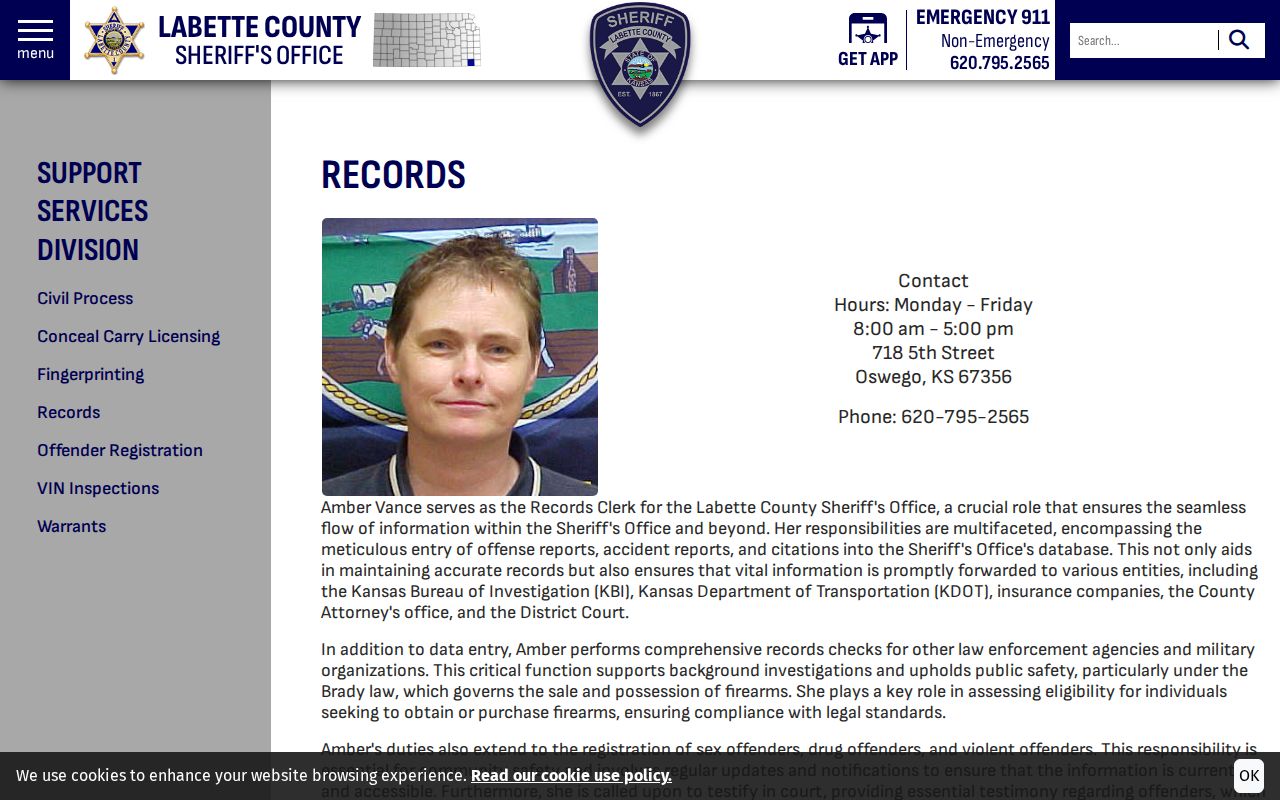
The records office is the key bridge when a three-day event has fallen outside the public 48-hour roster window.
Why Labette Release Views Lag
The sheriff's 2020 announcement documents intended design, not a guarantee that every live request will show a complete rolling set. On July 18, 2026, the Released view appeared stale or inconsistent with a same-day “Inmate Release” card on the sheriff's home page. No public update cadence explains the mismatch. It is therefore unsafe to treat a blank or old display as proof that no release happened.
The official 48-hour announcement is the source for the nominal window.
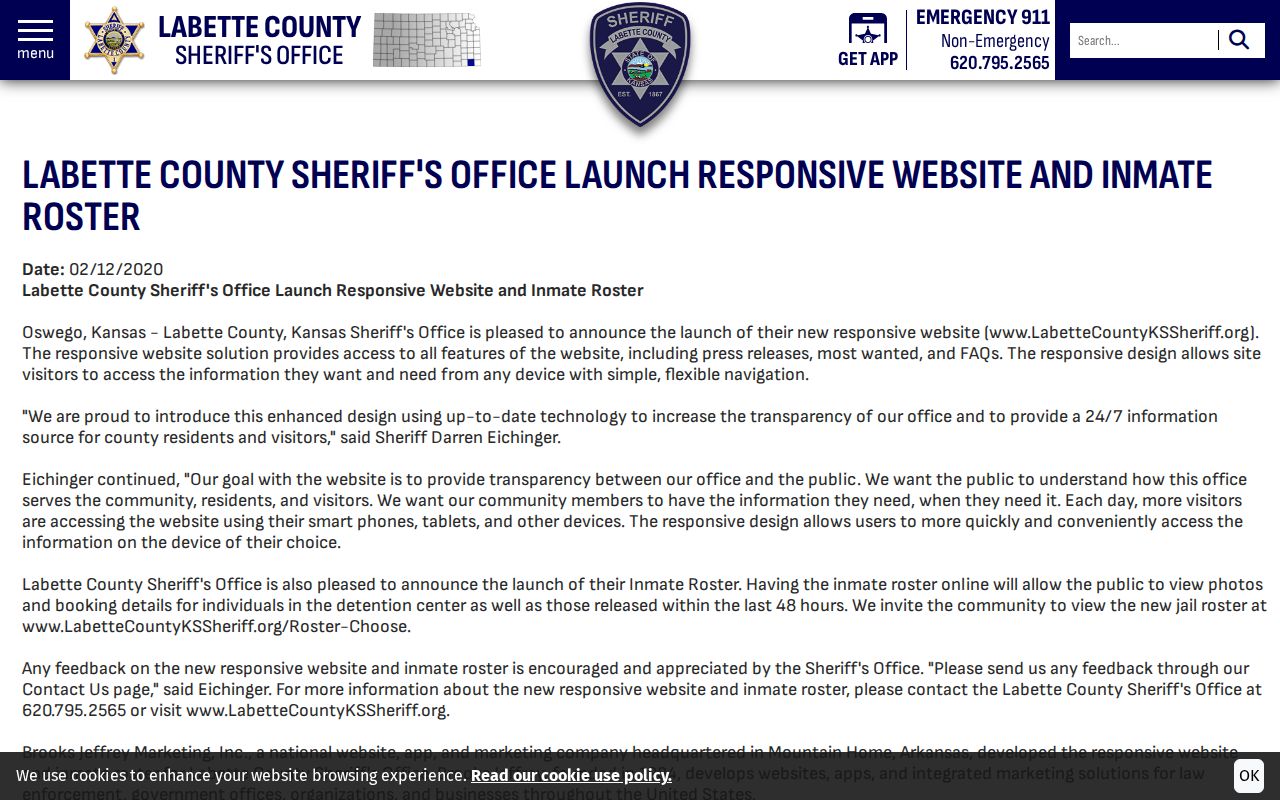
The documented window explains the missing third day, while the dated inconsistency supports checking the home card, VINE, staff, and written record.
Trace Labette Releases After Transfer
Labette County Jail holds people awaiting KDOC transportation after felony sentences and contract detainees from other jurisdictions. Transport deputies also move people to court, medical destinations, and other required locations. A sheriff release timestamp may therefore mark a transfer rather than release home. This is the principal local false positive in a three-day list.
If staff identifies a KDOC transfer, search KASPER by KDOC number or name after allowing for its working-day update. Labette conviction county can help match the prosecution, but it does not identify the present facility by itself. Kansas VINE covers adults in participating county jails and does not follow them into KDOC prison custody. KDOC has a separate notification route.
A federal or immigration hold requires a different lane. BOP reports only federal prison custody, and an ICE locator result has its own limits. A negative result in one system never clears every other system. The sound statement is narrow: Labette recorded its booking closed, while community release remains unconfirmed until the next custodian or release reason is known.
Labette Three-Day Release Scenario
Suppose a person was visible in Current on Friday and the search occurs Monday. Preserve the Friday booking number and profile details. Search the Released view even though it covers only the newest part of the span. If the card remains, quote its timestamp and match the episode. Then check any saved VINE message and the court docket for an order entered during the interval.
If no card remains, ask the records unit for that booking's custody event. A dismissal or bond order may explain why release was authorized, yet the jail's timestamp establishes when processing ended. If staff confirms KDOC transfer, the accurate sequence may be “Labette closed the county booking, then KDOC recorded state custody.” Those records are complementary, not conflicting.
When the court case is absent, try name variants and confirm the filing location. Do not state that no release occurred. The public case may be protected, the roster window may have expired, or the display may have lagged. A complete three-day answer rests on dated, system-specific evidence.
Public Record Search
Sponsored Results